How to Use AI for Basketball Practice Planning (Without Wasting Your Prep Time)
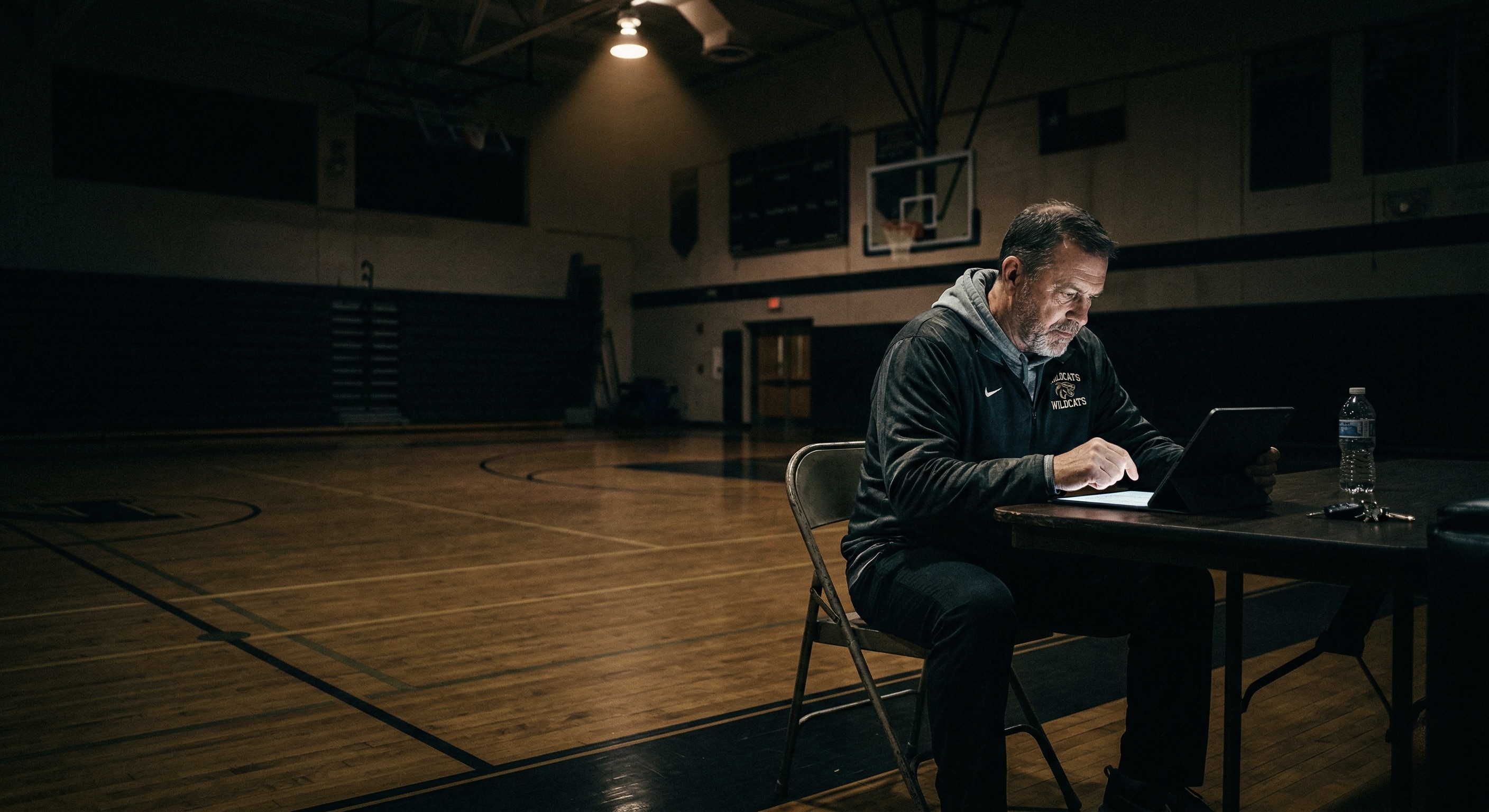
You've got film to watch. A staff meeting at 3:30. An athletic director who wants your eligibility report by Friday. And somewhere in there, you're supposed to build a practice plan that actually prepares your team for Saturday.
Most coaches spend 2–3 hours a week on practice planning. Not because they don't know what to do — but because translating what you know into a structured, timed plan that develops your players and prepares them for your next opponent is genuinely time-consuming.
AI changes that. Not by replacing your coaching judgment, but by handling the structure so you can focus on the substance.
Here's how high school basketball coaches are using AI practice planning tools — and what actually works.
Why Traditional Practice Planning Takes So Long
The math on a practice plan isn't complicated. But the decisions behind it are:
- What does this team need to work on right now?
- Which opponent concepts do we need to address?
- What's the right drill for this specific problem?
- How do I sequence segments so players are fresh for the hardest work?
- How do I hit individual development and team concepts in 90 minutes?
Experienced coaches carry the answers in their heads — but translating that into a written plan with times, progressions, and coaching points still takes time. And if you're a first- or second-year coach, you're building that mental library from scratch.
What AI Actually Does in Practice Planning
Good AI practice planning isn't a template generator. It's more like having a knowledgeable assistant who knows your context and can draft a structured plan that you then refine.
Here's what AI handles well:
Structuring time blocks. Given your practice length and priorities, AI can generate a segmented plan with realistic time allocations — warm-up, skill work, team concepts, competitive reps, conditioning, breakdown.
Connecting drills to game situations. If your opponent runs a lot of DHO action, a good AI planning tool will surface drill progressions that directly address that — not generic dribble-handoff drills, but ones calibrated to the defensive concepts you're installing.
Layering individual development. The best coaches don't treat practice as a single entity — they find time for guards to work on their handle, bigs to work on their footwork, and wings to work on their finishing. AI can help you block that time intentionally rather than squeezing it in as an afterthought.
Creating coaching points. Not just "run 5-on-5" but the specific things to look for, the corrections to make, the questions to ask players to check for understanding.
A Real Practice Planning Workflow with AI
Here's a workflow that works for high school coaches:
Step 1: Input your context. Tell the AI what you're preparing for. Your opponent's defensive scheme. The concepts you're installing this week. Where your team broke down in the last game. Three minutes of input gives the AI what it needs.
Step 2: Generate a draft plan. Ask for a full 90-minute (or 2-hour) practice plan with time blocks, drill names, and coaching points. Don't edit yet — just read it.
Step 3: Adjust for your people. You know which players need the ball in their hands. You know who's hurting. You know that your starting point guard shuts down mentally if you criticize him in front of the group. The AI doesn't. Make those adjustments.
Step 4: Lock it and share it. A finalized plan your assistants can execute from — even if you get pulled into something before practice.
That full workflow, for most coaches, takes 20–25 minutes. Down from two hours.
What to Look for in an AI Practice Planning Tool
Not every "AI coaching tool" is built for working high school coaches. A few things to evaluate:
Does it understand basketball context? Generic AI can help you structure time. But a basketball-specific tool understands what a shell drill is, what a ghost screen means, what "ball screen coverage" implies for a practice progression. That specificity matters.
Can it connect to your game context? If you've done any opponent scouting or uploaded your team's tendencies, can the practice plan reflect that? Or is every plan generic?
Does it work on a coach's budget? If it requires an enterprise contract or IT approval from your AD, most high school coaches won't use it. The tools that actually get adopted start free and scale from there.
Is it fast? Coaches don't have time for tools with a steep learning curve. The best coaching AI tools are fast to input, fast to generate, and easy to modify.
The Bigger Picture: Practice Planning Is Just One Piece
Practice planning is where you execute the work of the week. But the decisions that drive a good practice plan start earlier — in your scouting report, your game plan, your player development priorities.
The coaches getting the most out of AI aren't using it only for practice planning. They're using it across the full coaching workflow: opponent breakdown before games, practice structure during the week, play design when they need a new set, and player notes after games while the observations are fresh.
That connected workflow — scouting to game plan to practice to review — is where AI coaching tools create a real edge. Not by replacing your judgment. By giving you more time to use it.
XCIV.ai is built for exactly that workflow. Game planning, opponent scouting, practice planning, Chalkboard play diagramming, and player development tools — for high school, middle school, and AAU coaches. Start free — no credit card required.
Or if you're evaluating tools, see how XCIV.ai compares to Hudl and why most high school coaches end up using both.
94 Feet. Every inch, covered.
94 Feet. Every inch, covered.
XCIV.ai gives every coach a scouting room, a practice planner, and a game plan engine.
Start Free